The Lion Man and the Raw Material of Imagination

A 40,000-year-old human–lion figure makes a powerful case for broad knowledge: creativity does not come from nowhere, but from concepts recombined, tested, and shared.

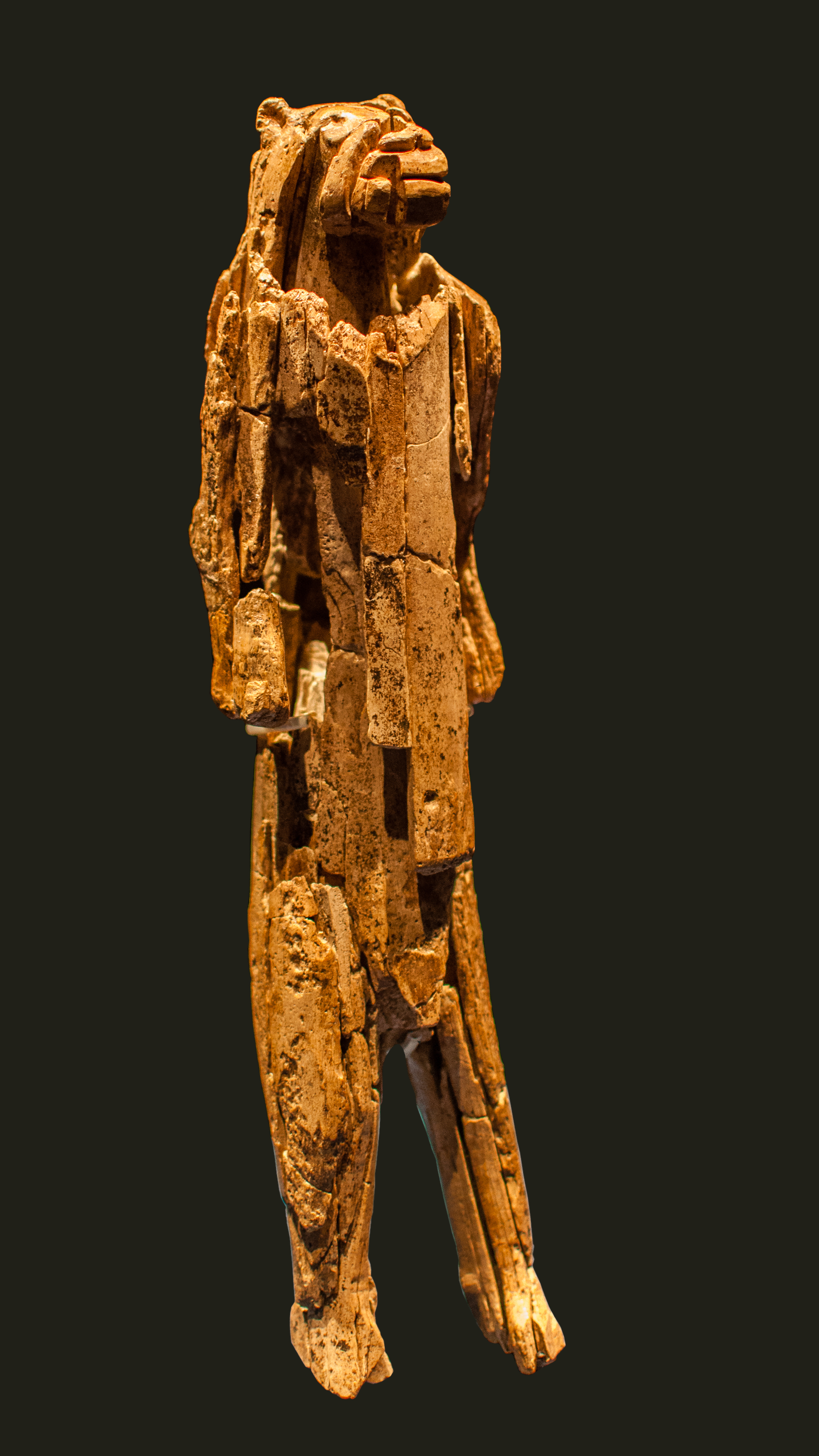
About forty thousand years ago, someone took a mammoth tusk and made a body that crossed a boundary.

The figure now known as the Lion Man stands upright like a human, but much of its anatomy is feline. It is not merely a record of an animal someone saw. Nor is it simply a portrait of a person. It brings human and lion features together in one carefully worked form.

That makes the Lion Man an extraordinary object through which to think about creativity. It also makes it a fitting first sculpture for the Personal Museum in Nousfarer.

The reason is not just that the object is old. It is that the Lion Man makes a basic human process visible: we learn distinctions from the world, separate them in thought, combine them in ways the world did not give us, and externalize the result so that other minds can encounter it.

Creativity does not begin from nothing. It begins with a repertoire.

The Imagination Is Visible; The Story Is Not

The original Lion Man is an approximately 31-centimeter mammoth-ivory figure from Hohlenstein-Stadel Cave in the Swabian Jura of Germany. The Museum Ulm record dates it to about 40,000 years ago, placing it among the oldest surviving figurative sculptures known.

It is tempting to move immediately from those facts to a complete story. The figure is often described as a mythical creature, a deity, a spirit, a shaman, or evidence of a particular ritual. Any of those interpretations might be worth investigating. None is securely translated from the object itself.

We do not know the maker's name for the figure. We do not know whether it represented one composite being, a transformation, a person wearing animal material, a remembered story, or a category for which no modern word is adequate. Even “Lion Man” is a modern scholarly name.

The uncertainty matters. A compelling interpretation should not be mistaken for recovered testimony.

Yet one conclusion is difficult to avoid. The maker brought features that ordinarily belonged to different bodies into a single intelligible form. Whatever the figure meant in its original world, it demonstrates conceptual combination: the capacity to hold known properties apart and make them coexist in imagination before making them coexist in ivory.

Creativity Needs Something To Work On

We often talk about creativity as if knowledge gets in its way.

The creative person is supposed to ignore conventions, escape education, and produce the unprecedented from an untouched inner source. Knowledge belongs to the cautious expert; imagination belongs to the beginner who has not yet learned the rules.

There is a truth inside that picture. Expertise can harden into habit. Familiar solutions can make unfamiliar ones harder to see. A person can know a field deeply and still repeat its assumptions.

But ignorance does not solve that problem. An empty repertoire has fewer materials to transform, not more.

A mind can only form relations among distinctions it can somehow represent. The wider and more accurate the repertoire—animals, mechanisms, mathematical structures, narrative forms, historical cases, rival theories, materials, techniques—the larger the space of possible relations among them. Breadth does not guarantee an original idea. It increases the number of components, contrasts, analogies, and constraints with which imagination can work.

Depth has a different role. It helps us tell a productive synthesis from a superficial resemblance. Anyone can place two words beside each other. Real creative work requires enough understanding to know which properties can be transferred, which conflicts matter, what has already been tried, and what the new combination can actually explain or do.

Breadth supplies possibilities. Depth supplies judgment.

This view resembles what researchers call recombinant creativity: new work often joins existing elements in an uncommon but intelligible arrangement. A large study of scientific papers found that highly cited research was often grounded in conventional combinations while also introducing a smaller number of unusually combined sources. Novelty did not replace inherited knowledge; it emerged against a stable background. The result is suggestive rather than a universal law of creativity, but the pattern is important. You can read the study in Science.

The Lion Man gives the general idea a memorable form. Human and lion were not invented from nothing. The combination was.

Why Reinventing The Wheel Is Not Enough

There is another reason knowledge matters to creativity: without history, we cannot reliably recognize novelty.

A person may spend years reaching an idea that is new to them but familiar to everyone who knows the field. That effort is not necessarily wasted. Independent rediscovery can teach deeply, reveal a different route, or even provide useful confirmation. But rediscovery and frontier progress are not the same achievement.

To move an idea beyond its current boundary, we first need some account of where that boundary is.

That means knowing predecessors, failed attempts, abandoned branches, established solutions, and the reasons a field adopted its present vocabulary. It means learning more than the current winner. A discarded framework may contain a distinction worth recovering. A neighboring discipline may already have a method for the problem in front of us. A concept that appears radical in one community may have a long history in another.

Historical knowledge does not imprison creativity inside tradition. It lets creativity begin farther forward.

This is one reason a map of ideas matters. Search can retrieve a document when you already know what to ask for. A map can show that there are regions, lineages, and alternatives you did not know enough to name.

From One Mind Into Cultural Evolution

The Lion Man is not only an imagined combination. It is an imagined combination made external.

At some point, the figure ceased to exist only as an intention, image, or sequence of decisions in living minds. It became a cultural artifact: something other people could see, handle, remember, discuss, copy, reinterpret, preserve, lose, discover, reconstruct, scan, and study.

That transition—from thought into a shareable form—is one of the engines of cultural evolution.

Human culture accumulates because ideas do not have to be recreated in isolation by every new mind. Skills, stories, diagrams, tools, institutions, artworks, books, papers, recordings, and software preserve parts of prior thought outside the individual. Later people inherit those forms imperfectly. They select among them, modify them, combine them with other traditions, and externalize further variations.

Researchers of cumulative cultural evolution emphasize that this process depends on populations, transmission, and inherited improvements, not only isolated flashes of individual genius. Useful introductions include Mesoudi and Thornton's account of cumulative cultural evolution and Muthukrishna and Henrich's “collective brain” model.

The Lion Man cannot by itself prove a general theory of cultural evolution. It can make the process unusually easy to see. A conceptual synthesis became material. The material survived its maker. Well over a thousand generations later, it still enters new minds and prompts new combinations.

The Argument For Nousfarer

The Lion Man offers a compact argument for Nousfarer: knowledge is not creativity's opposite. It is creativity's material.

Nousfarer represents the world of ideas as a navigable universe. Broad categories become galaxies. Disciplines become solar systems. Subfields become planets. Conceptual frameworks become buildings, and concepts become the puzzles encountered inside them. The Personal Museum carries cultural artifacts aboard the ship.

This is more than a navigation metaphor. It expresses a view of what learning is for.

The goal is not to collect disconnected facts until the mind resembles a crowded storage room. It is to acquire a structured repertoire: concepts with histories, relationships, uses, limits, and alternatives. Each concept understood becomes another possible component of a thought that does not yet exist. Each framework adds a way of organizing a problem. Each encounter with another field creates the possibility of a bridge.

In that sense, all of Nousfarer testifies to the same process as the Lion Man. Human beings inherit a world of distinctions, recombine parts of it in imagination, test the result against reality and other minds, and sometimes give the new idea a durable form. That form then becomes part of the world inherited by whoever comes next.

No atlas can make a person creative. A large vocabulary can remain inert. A brilliant analogy can still be false, and novelty can still be useless or destructive. Curiosity, practice, criticism, judgment, and contact with reality remain indispensable.

But a map can widen the repertoire. It can reveal forgotten lineages, neighboring methods, rival assumptions, and concepts outside the route we happened to inherit. It can help us spend less time unknowingly rebuilding old wheels and more time asking what could be built from the wheels, wings, equations, stories, and structures humanity has already made.

What The Lion Man Asks Of Us

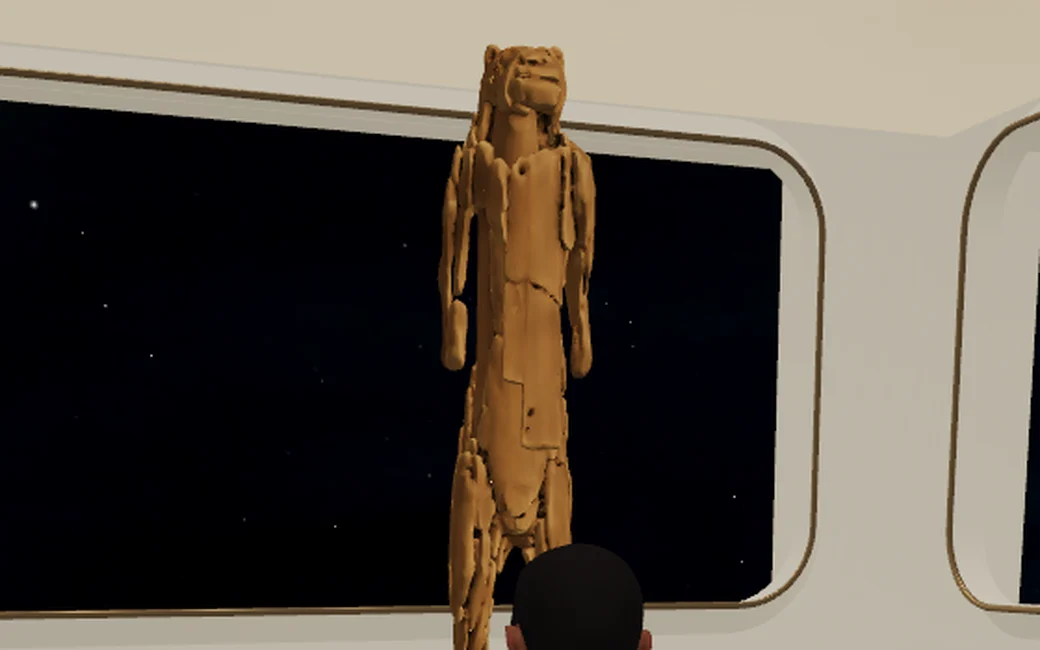
The Lion Man has survived long enough to become many things: archaeological evidence, a reconstructed museum object, a digital model, a subject of interpretation, and now a sculpture encountered inside a game about the history of ideas.

Its original meaning remains beyond recovery. Its continuing effect does not.

The figure asks us to take imagination seriously without turning uncertainty into myth. It asks us to see knowledge not only as something preserved, but as something generative. And it asks us to recognize creativity as both personal and cumulative: a mind makes a new relation, gives it form, and places that form where other minds can begin from it.

That is how ideas acquire histories.

It is also how the history of ideas moves forward.


Encounter the Lion Man: Launch Nousfarer, enter the Personal Museum, open the Nousdex, and install the Lion Man on a sculpture pedestal.

Read next: Ideas Evolve. How variation, selection, inheritance, recombination, and institutions shape the history of thought.

See the world it belongs to: Why the Atlas Has a Spaceship. How Noosaga's map becomes a universe you can navigate.

Try this in Noosaga

Turn the essay into a concrete map: open a field, compare frameworks, and inspect the prerequisite layer.

Try interactive timeline: Cognitive PsychologyDocs: getting startedDocs: how to read timelines