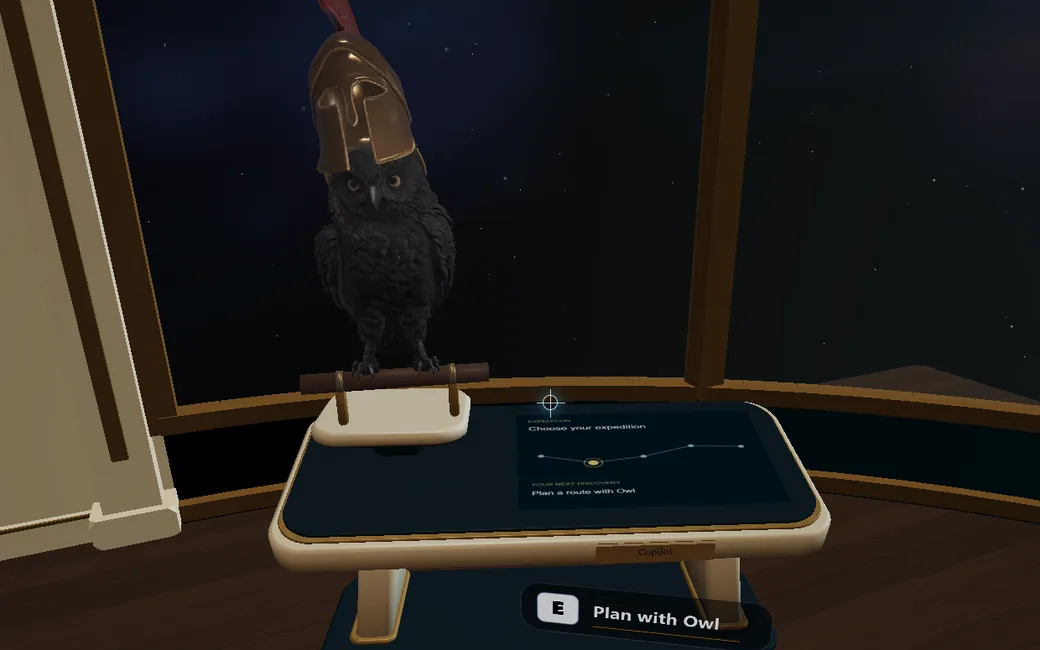
A navigator for your questions
Tell Copilot what you want to understand. It charts an expedition through the Atlas, and gold markers lead you to each stop. Or ignore the route and fly wherever you like.
ABOUT NOOSAGA · EARLY ACCESS BETA
More than 1,900 fields of knowledge, each one a planet you can land on. Nousfarer is the game we’re building to travel through them.
Step aboard NousfarerFree · Plays in your browser · No account needed to startBest on a computer with a keyboard. Touch controls on phones and tablets.
Discover the idea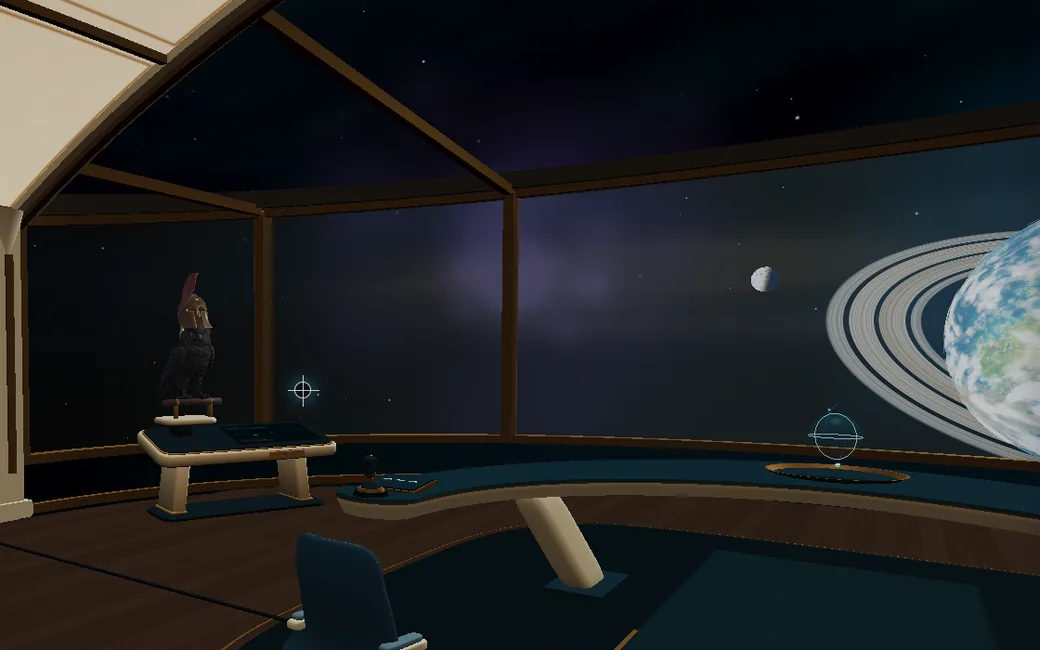
01 / THE IDEA
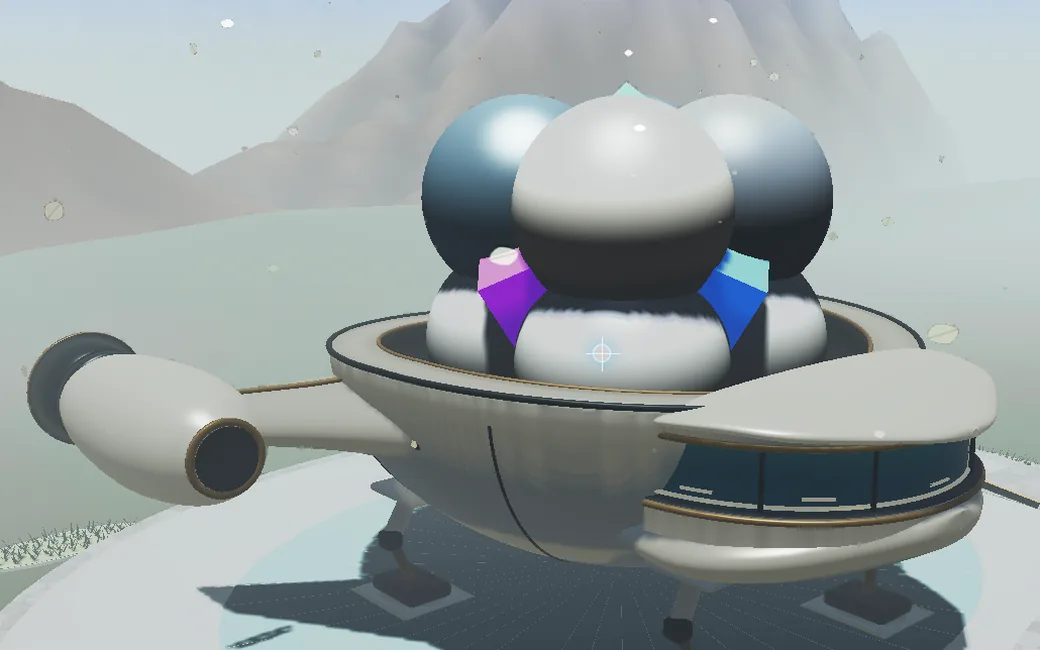
Nousfarer is Noosaga’s first game: a 3D universe where every field of knowledge is a place. You captain a ship, land on the fields that interest you, and learn your way through the ideas inside them.
02 / THE WORLD
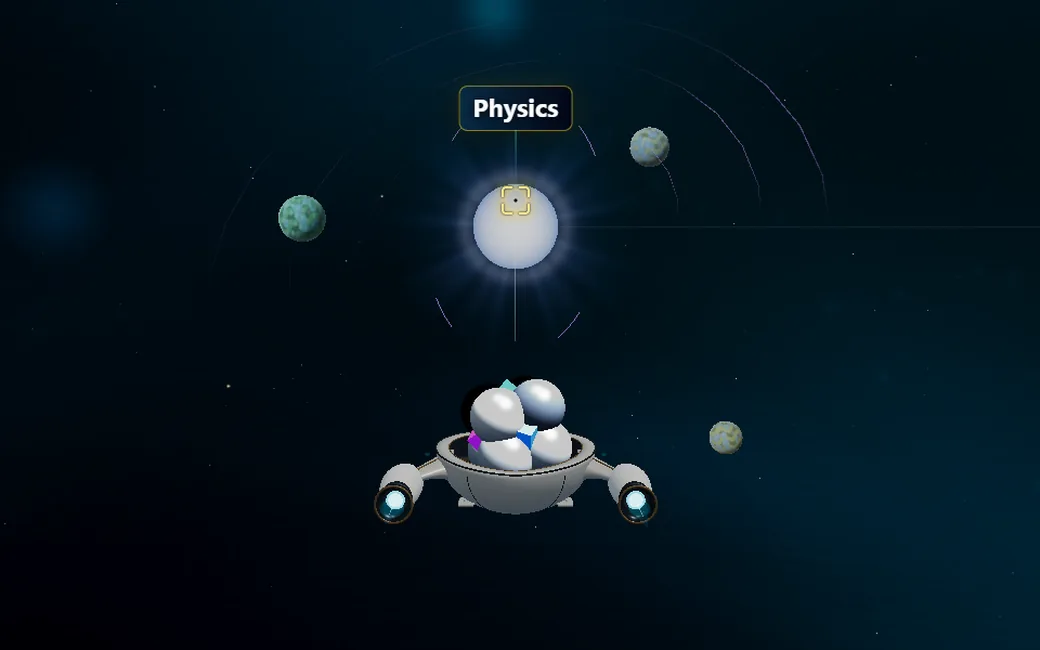
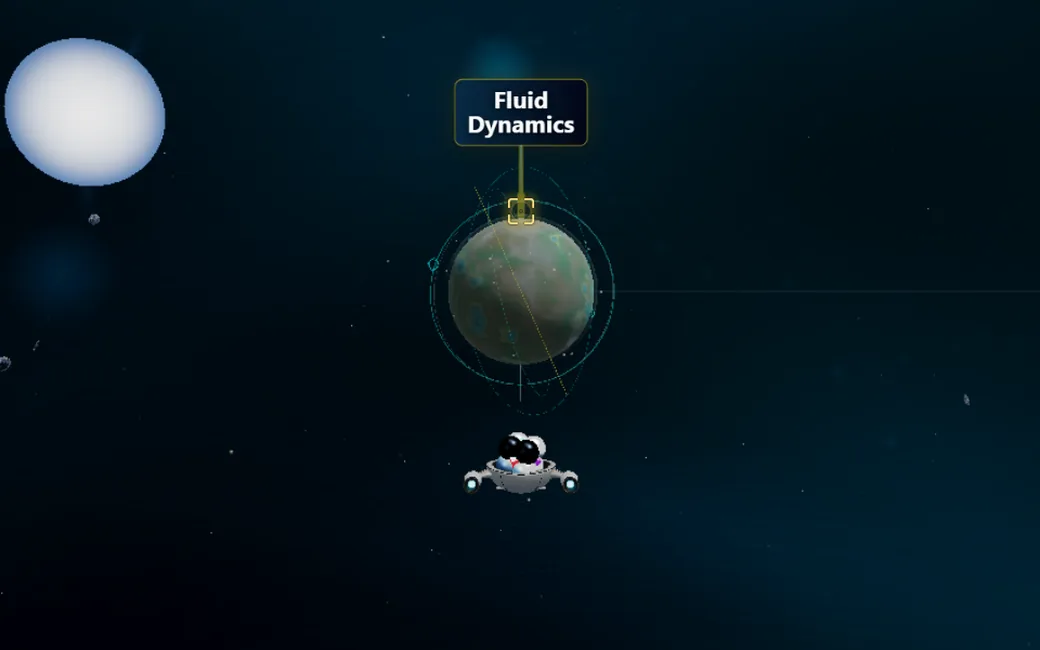
The structure of the Atlas becomes the geography of your journey.
Category
Natural Sciences
Discipline
Physics
Subfield
Classical Mechanics
Framework
Newtonian Mechanics
One route through the game, from galaxy to institute doors. Languages follow proficiency courses and learning modules instead.
03 / THE JOURNEY
Tell Copilot what you want to understand. It charts an expedition through the Atlas, and gold markers lead you to each stop. Or ignore the route and fly wherever you like.
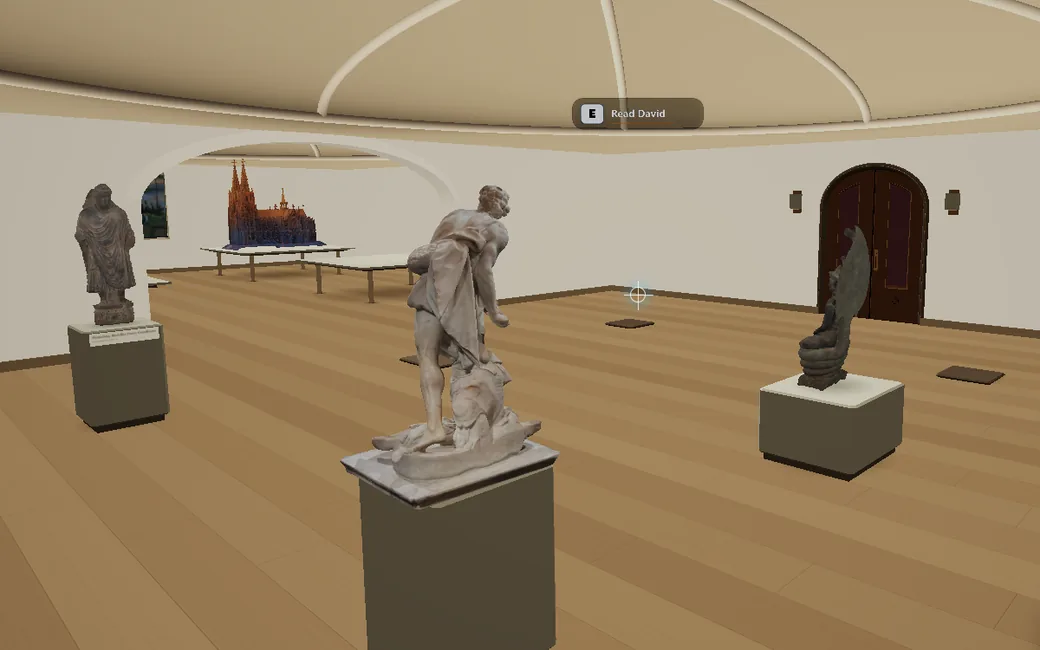
Find art, objects and architecture on your travels. Read their histories, inspect their details, and arrange them in the museum aboard your ship.
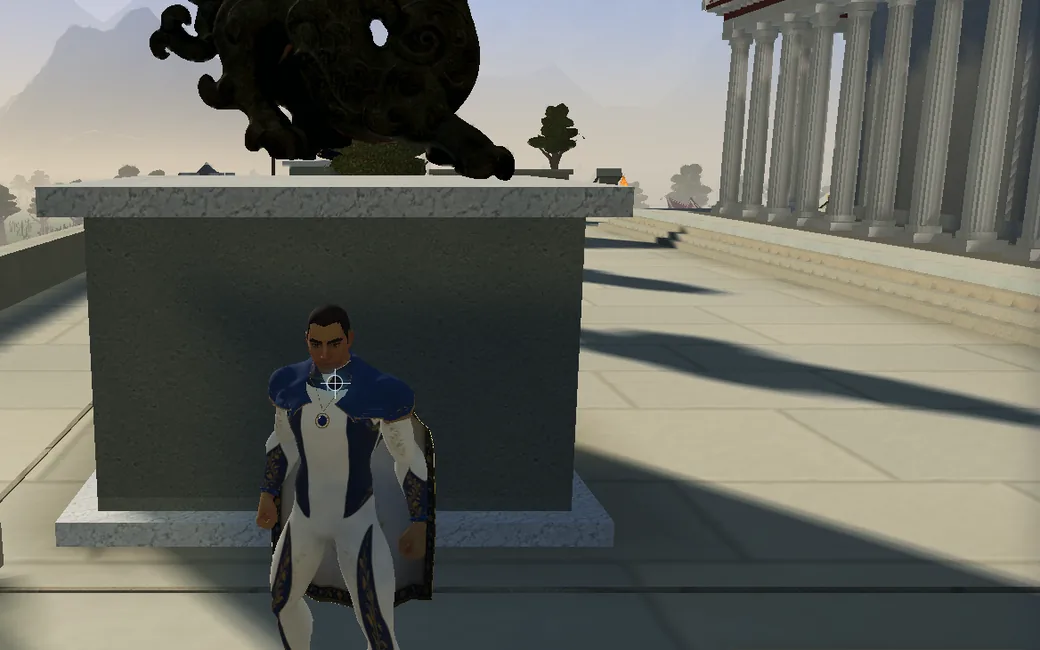
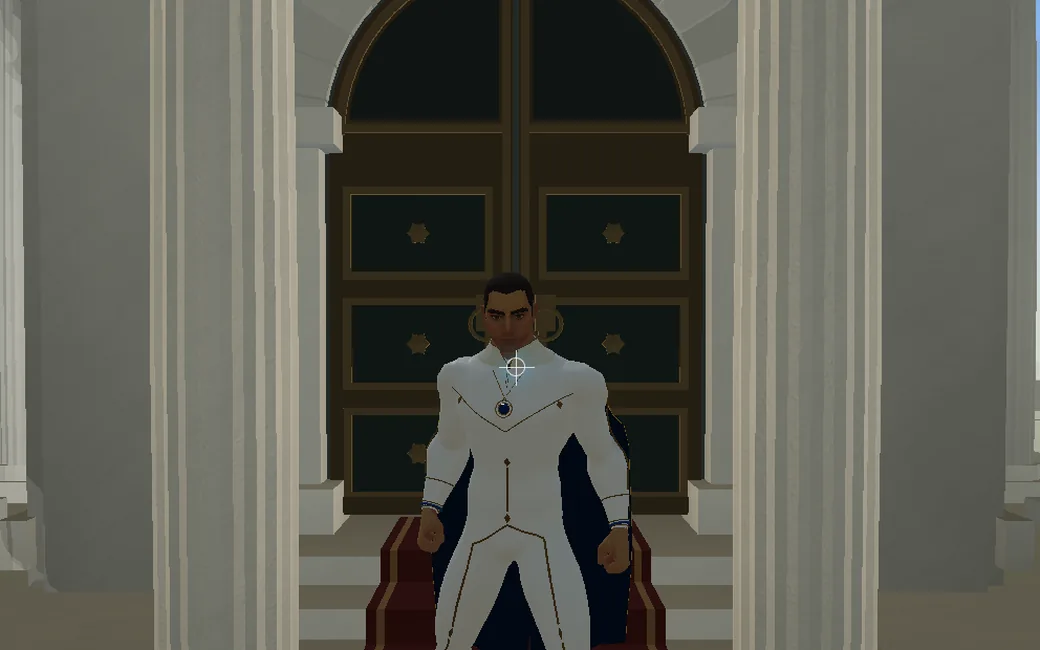
Choose how your explorer looks before you board, and change outfits later in the ship’s wardrobe. Completing an institute opens its vault and rewards.
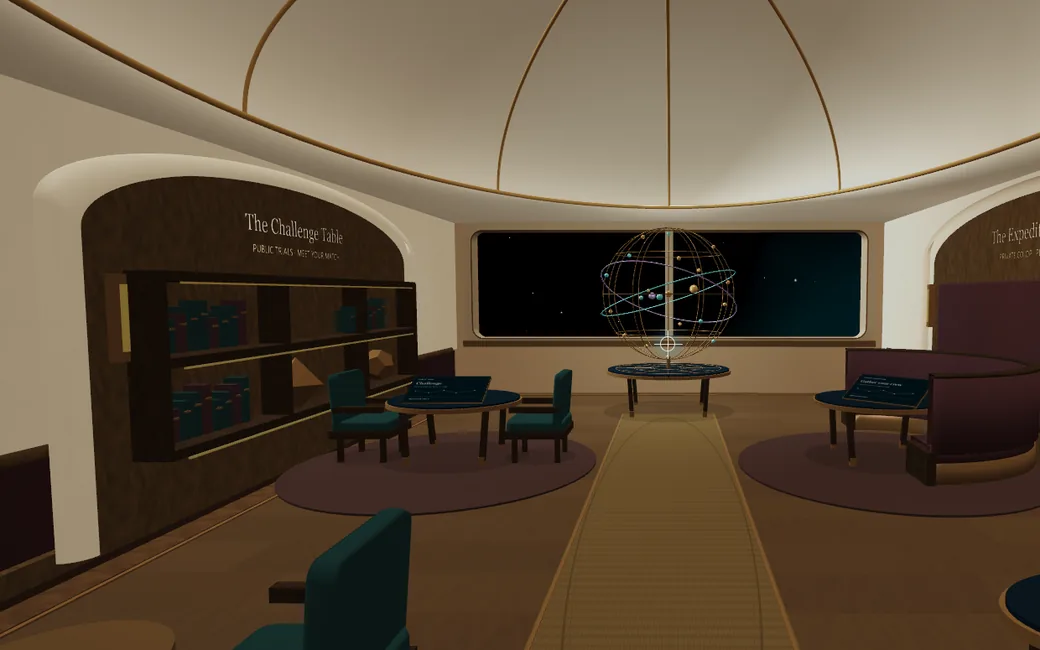
Earn three feathers from institutes to open the ship’s Concordance Chamber. Challenge another player to a best-of-three match, or invite a friend to explore together.
04 / THE BEGINNING
“I could find material inside a field, but I could rarely see the field itself.”
Textbooks offered one route. Encyclopedias offered individual entries. I wanted to understand how the approaches, arguments, and prerequisite concepts fit together—and have a reason to keep exploring them.
Noosaga began by mapping that structure. Nousfarer makes it a place you can move through. A destination gives your curiosity a direction; a room gives one idea your attention; a question asks you to pause before moving on.
Axel Pond · Why I called it Noosaga05 / THE FOUNDATION
The Atlas organizes the fields, frameworks, curricula, articles, and quizzes behind Nousfarer. Its history shapes the planets, and its curricula organize the lessons inside their institutes.
Understand the learning structureNous / mind, intellect, understanding
A story unfolding across generations
One who journeys
Noosaga is the story of human thought.
A Nousfarer is a voyager through it.
Yes. Nousfarer is free to play in your browser during the public preview. No payment or card is required.
No. You can start playing straight away. Sign in with Google to save your learning progress and rewards to your profile and to ask Copilot your own questions.
An up-to-date web browser. It plays best on a computer with a keyboard; phones and tablets get touch controls. If movement feels slow, choose a lower graphics preset in the game’s settings.
No. The universe, its lessons and your progress load from our servers, so you need an internet connection while you play.
It is for anyone curious, students included. Institutes follow the history of a field, and Copilot can suggest a route suited to what you already know. Use it to begin or support deeper study: passing a trial records progress, not expertise.
Yes. Once you have earned three feathers, the Concordance Chamber on your ship offers Public Quick Match, a best-of-three contest against another player, and Private Co-op, where you share an invite code and explore together.
AI helps generate explanations, curricula, quizzes and expedition plans. Coverage varies, and content can be incomplete or wrong. Automated checks help find problems; educational quality still requires careful reading of the actual material. Check important claims against primary sources and expert references.
YOUR CURIOSITY. YOUR COURSE.