THE NOUSFARER FIELD GUIDE
Scholar's Towers
Climb a tower storey by storey: read each concept, answer its guardian's questions, take the teleporters, and claim the crown.
Each Scholar’s Tower holds one framework of its subject, such as Newtonian Mechanics on the Classical Mechanics planet. You climb it from the hall to the crown, one concept on each storey.
The hall
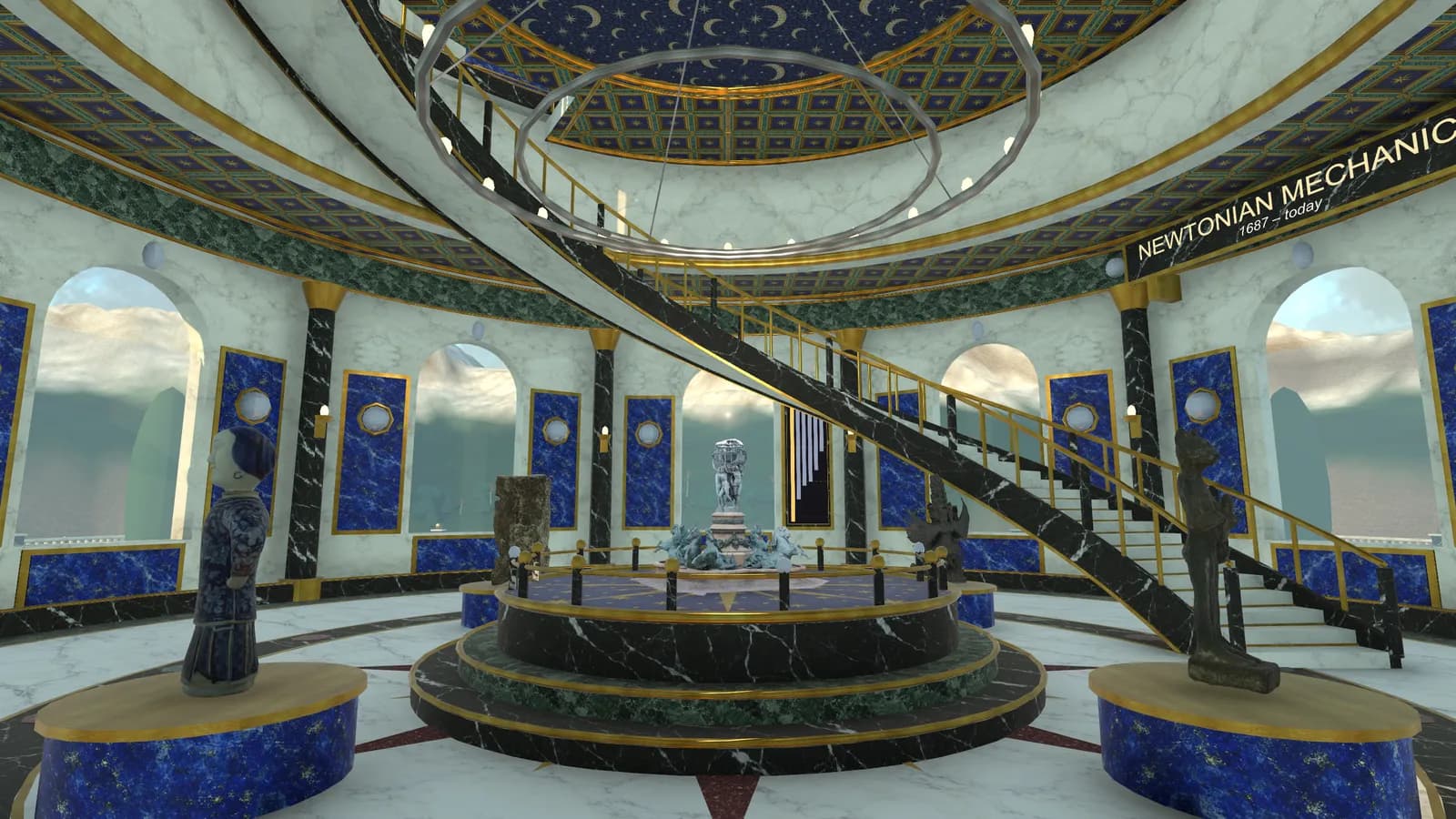
Walk up to a tower’s door and go in. In the hall, the guide’s desk holds the framework’s article: what problem it set out to solve, how it approaches it, and how it fits the subject’s history. Read it before you climb, or come back to it any time.
The first time a tower is visited, its storeys are written for it: you can read the framework while they are prepared. Sign in to climb, so your progress is kept.
A storey: read, then answer
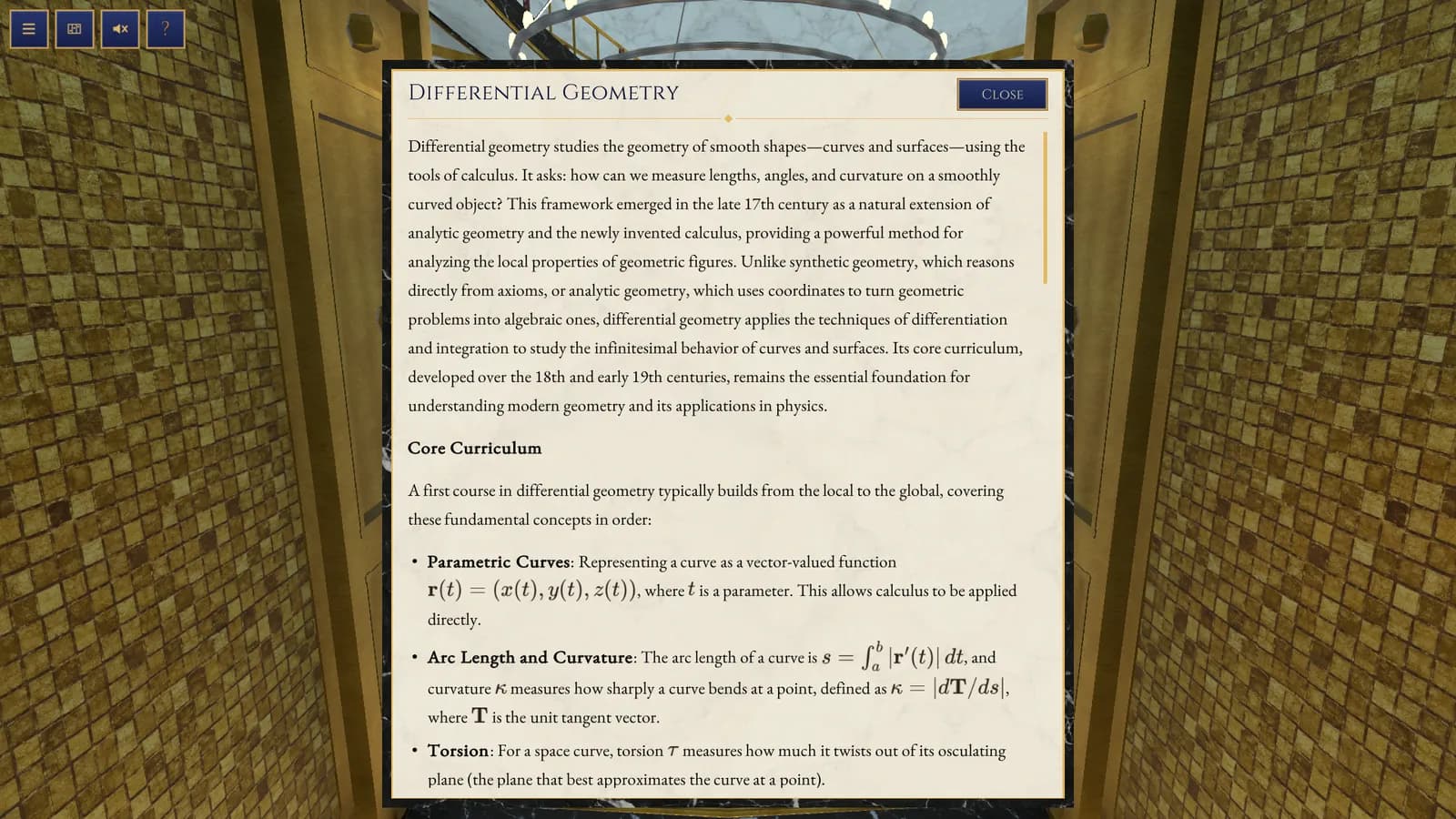
Each storey is one concept, in the order the framework’s curriculum teaches them. At the lectern, read its article; mathematics is typeset as you would see it in a book.
Then face the storey’s guardian, an artwork from the museum catalogue, and answer its questions. Get every question right and the stair to the next storey opens; the guardian’s book then rests on the plinth so you can read it again.
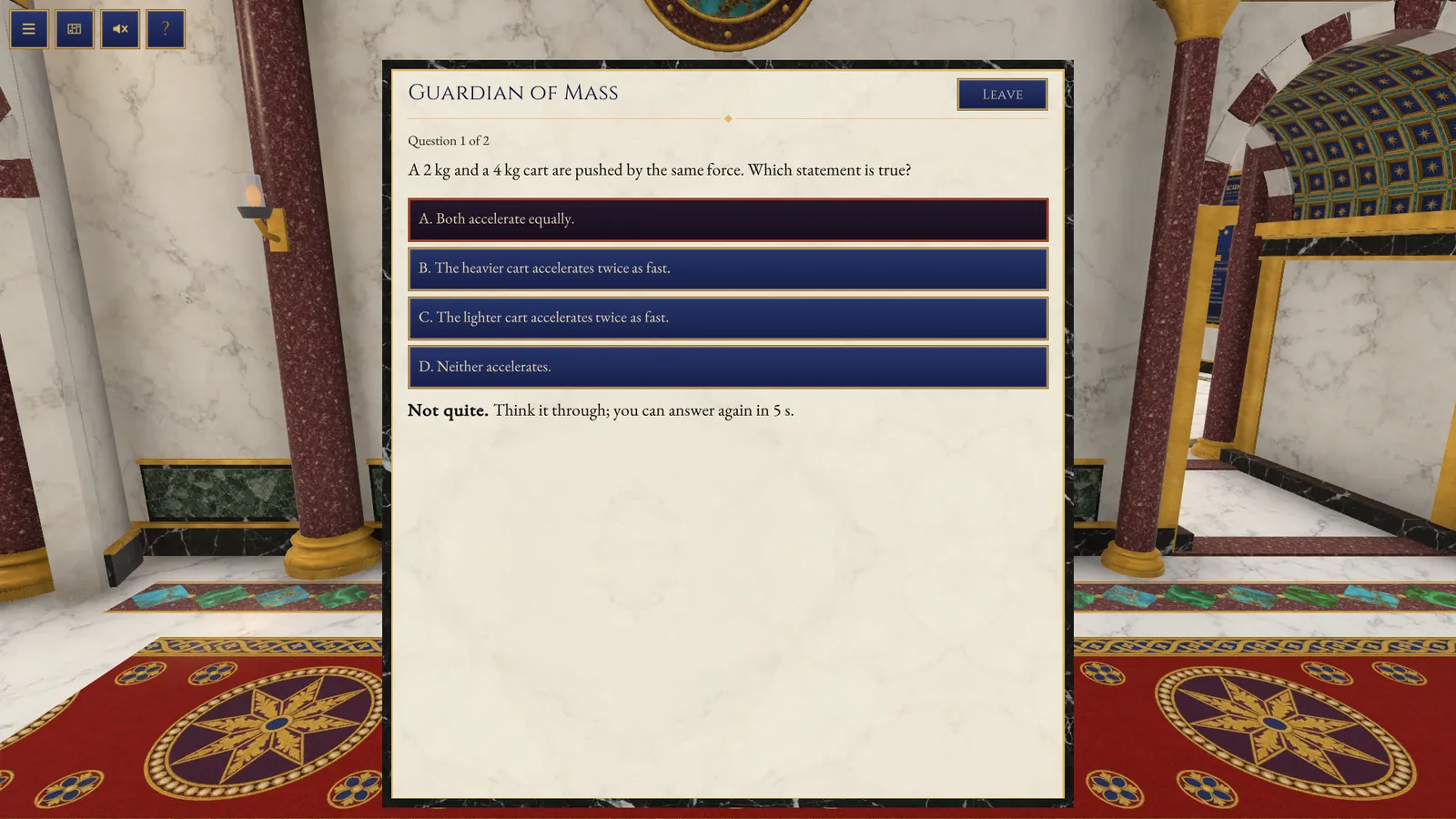
A wrong answer pauses the guardian for a few seconds before you can try again (5 seconds, then 10, then 15). The pause is there to make you think, not to punish you: re-read the article if you need to.
Teleporters
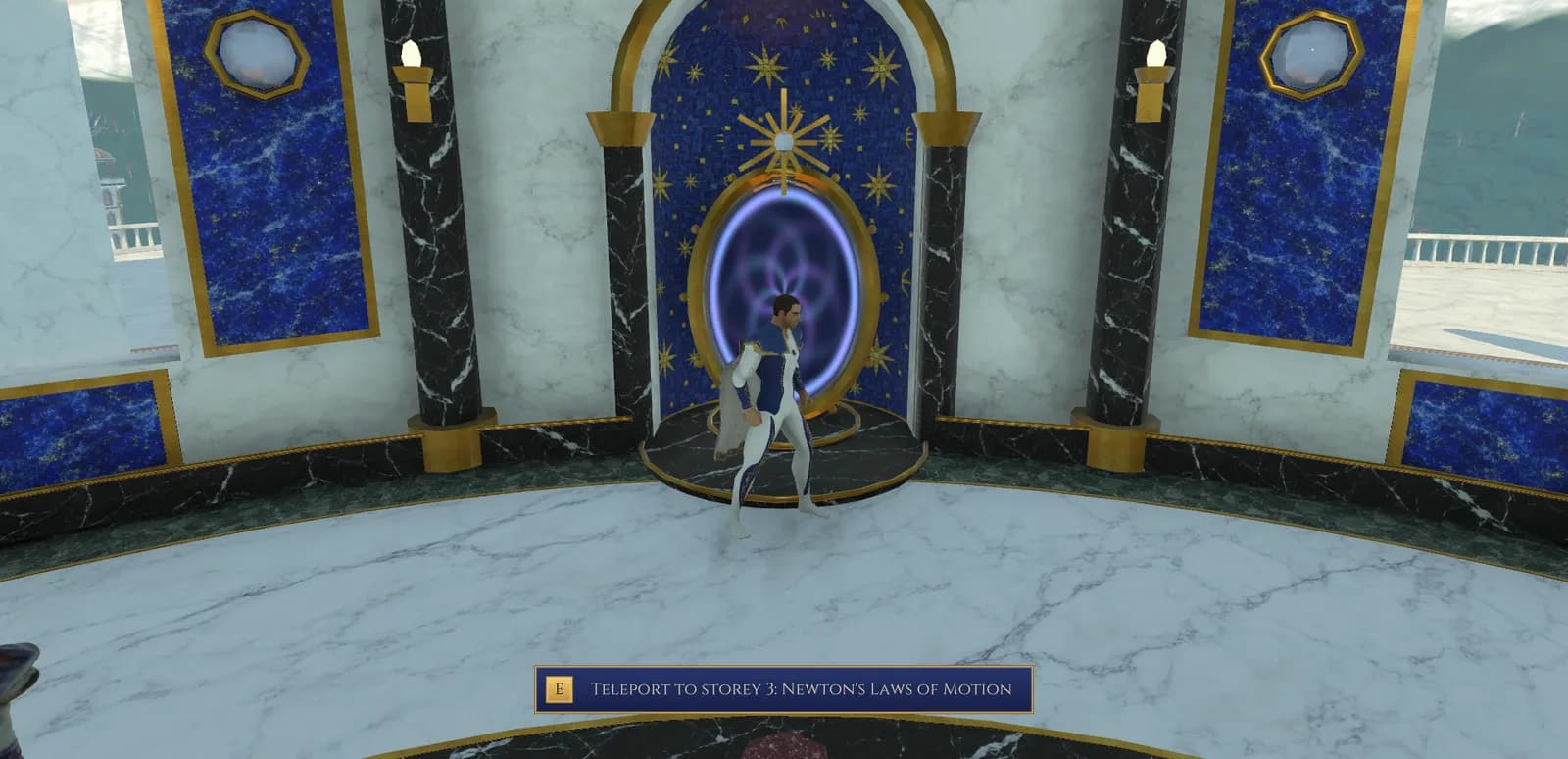
You do not have to climb every stair again. Each tower has teleporters: the one in the hall takes you to the storey where you left off, and the ones above take you back down.
The crown
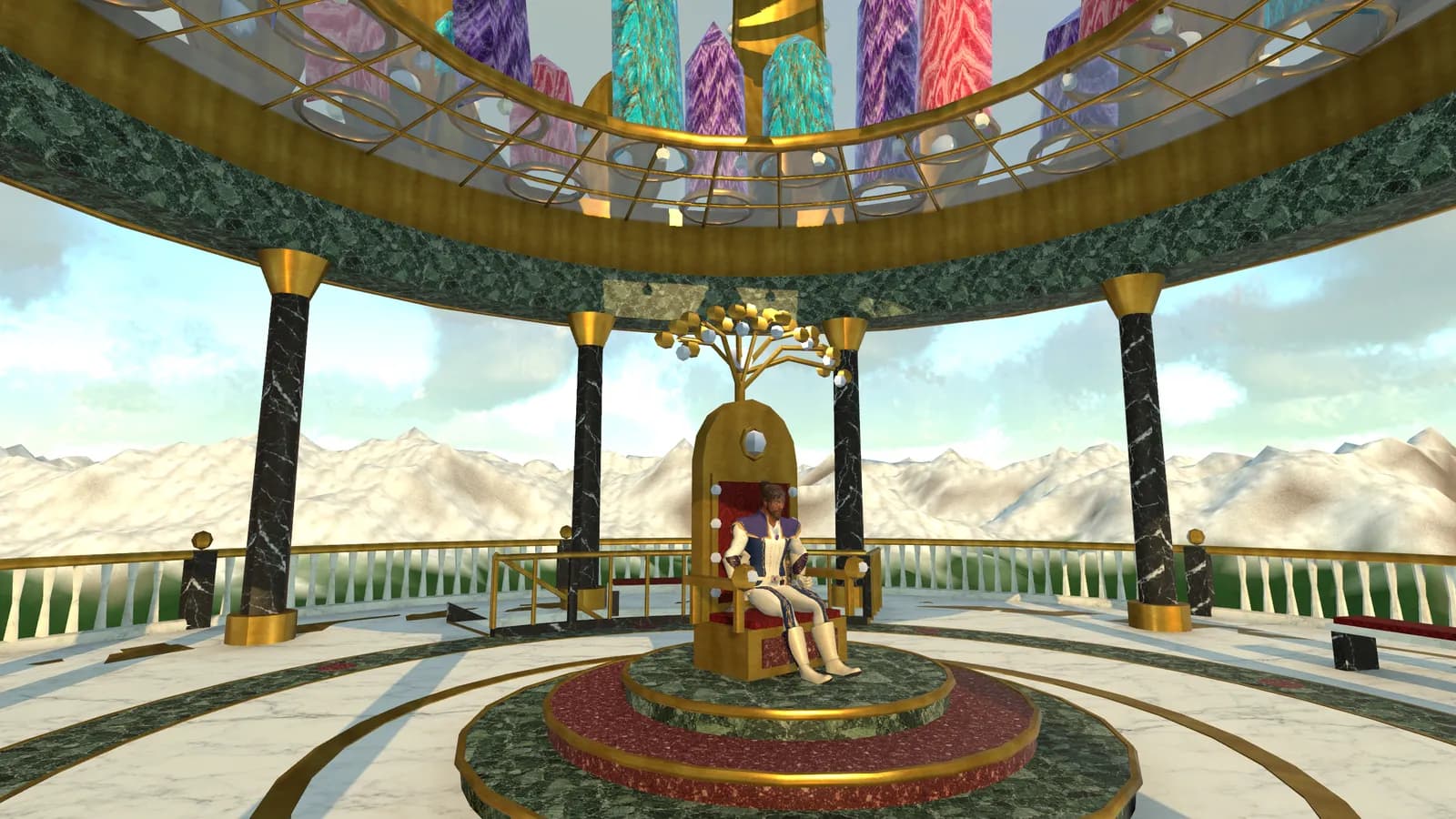
Master every storey and climb to the crown. The tower’s keeper rises from the throne, gives you the tower’s diploma and steps down; the throne is yours to sit on. A crowned tower also earns Ethos on its planet, a gift for your wardrobe, and a feather for your cloak in its galaxy’s colours. The Ethos Atlas aboard records every tower you have crowned.
Your progress in the city
Back in the city, the map marks the towers you have begun and crowned, and the objective at the top of the screen always names your next step, with a gold marker over the tower you are heading for.
PUT IT INTO PRACTICE
Continue your voyage.
Your next discovery is waiting.